PortMiami is where a simple wrong turn can become a cruise-day scramble. The terminals sit across a busy island connected to downtown by the PortMiami Bridge, and the address on your cruise documents may be only one letter different from another terminal several minutes away. Add luggage, Miami traffic, garage entrances, and thousands of other passengers arriving at the same time, and the question becomes very practical: where does the bus actually drop your group, and what happens after everyone gets out?
That is exactly what this guide explains. You will find the terminal addresses, nearby parking garages, current posted parking costs, airport routes, luggage tips, accessibility information, and the details that make a Miami charter bus or party bus rental easier than splitting everyone across cars, rideshares, and airport shuttles.
TLDR: Confirm the cruise line and terminal first, then request pricing for a bus that can unload your group at the designated passenger and luggage area in front of that terminal. PortMiami lists parking at $35 per vehicle per day in several long-term facilities, while oversized vehicles use designated surface parking such as Surface Lot E. A quick form or call to 305-428-2592 lets you compare vehicle sizes, amenities, and all-inclusive rates for your exact sailing.
Why Rent a Bus to PortMiami?
PortMiami is officially recognized as the busiest passenger cruise port in the world, and its latest posted fiscal-year total shows more than 8.5 million cruise passengers moving through the port. That scale matters when your group is arriving with suitcases, garment bags, children, mobility equipment, or several different hotel pickup points.
A Miami charter bus or party bus keeps the transportation plan in one place. Instead of asking ten guests to find their own way to the correct terminal, everyone meets at one pickup point, loads luggage together, and arrives at the cruise terminal as one group. You can request a Miami group transportation plan from Brickell, Miami Beach, Coral Gables, the airport, Fort Lauderdale, or several pickup points across South Florida.
The biggest advantage is not the ride itself. It is the simple arrival. PortMiami advises cruise passengers to drop luggage and passengers at the designated terminal before parking whenever possible.
A bus follows that same logic: unload the group at the terminal entrance first, then avoid paying for a line of separate cars and walking back through the port with heavy bags.
Whether you need a small vehicle for a family sailing, a 25-passenger party bus for a pre-cruise group, or a full-size coach for a wedding party or corporate retreat, Charterpartybusmiami.com helps you compare the right vehicle for your headcount. Fill out the quick form or call 305-428-2592 to check pricing.
PortMiami Cruise Terminals and the Main Port Map
Do not type only "Port of Miami" into a map and assume you are finished. PortMiami has terminals on the north, west, and south sides of the island, each with its own address. The safest planning step is to match the terminal letter on your cruise documents with the official PortMiami directions page before the group leaves the hotel.
The official terminal list includes Terminal AA at 2200 N. Cruise Boulevard, Terminal A at 2000 N. Cruise Boulevard, Terminal B at 1761 N. Cruise Boulevard, Terminal C at 1741 or 1751 N. Cruise Boulevard, Terminal D at 1435 N. Cruise Boulevard, Terminal E at 1265 N. Cruise Boulevard, Terminal F at 1103 N. Cruise Boulevard, Terminal G at 909 N. Cruise Boulevard, Terminal V at 718 W. Cruise Boulevard, and Terminal J at 1120 Caribbean Way.
Charter Bus and Party Bus Drop-Off at Terminal AA
Terminal AA: 2200 N. Cruise Boulevard. This is MSC Cruises' large north-side terminal, opened in 2025 and designed to handle very high passenger volumes. The official PortMiami terminal page identifies Terminal AA as a four-level facility capable of handling multiple ships, so expect heavier pedestrian and luggage movement on large MSC sailing days.
A Miami charter bus or party bus should follow the terminal signs for the marked passenger and luggage unloading area at Terminal AA. The group should have luggage organized before reaching the curb because the active terminal lane is for unloading, not for a long waiting stop. Once everyone is out, the bus should follow the current port instructions for staging or leaving the terminal area rather than remaining in the passenger lane.
Garage AA is at the same address and has a posted long-term rate of $35 per vehicle, per day. The garage clearance is listed at 7 feet on its remaining levels, so a tall minibus or full-size charter bus should not be treated like a regular passenger car. If your group is arriving together by bus, unloading at the terminal is easier than sending multiple vehicles into a garage built around standard-height parking.
Before leaving for the port, review the official PortMiami cruise terminal page and confirm that the cruise line still lists Terminal AA for your sailing. Then call 305-428-2592 or request estimates online for the right-size vehicle.
Charter Bus and Party Bus Drop-Off at Terminal A
Terminal A: 2000 N. Cruise Boulevard. Royal Caribbean's Crown of Miami is one of the most recognizable terminals at PortMiami, but the striking building does not make the navigation simple. The terminal sits on the north side of the port near Garage A, and the road approach can become crowded when several large ships are loading at once.
Your group should have the cruise documents ready before entering the port so the bus can follow the signs for Terminal A without stopping to search for an address. Drop luggage and passengers at the terminal's marked unloading area, then use the port's current instructions for where the bus can wait or exit. The exact curb sequence can change with ship movement and terminal traffic, so the sailing date and terminal letter belong in the quote request.
Garage A serves Terminal A, but its rates are handled separately from the standard PortMiami schedule. The official parking page directs passengers to the Royal Caribbean parking information for current rates and availability. That is another reason a large group often prefers a Miami charter bus rental: one vehicle reaches the terminal curb instead of every passenger searching for a separate Garage A space.
For Royal Caribbean groups, compare a 40-56 passenger charter bus with a smaller minibus based on luggage volume, not just seats. A family group with large suitcases may need more storage than the headcount alone suggests.
Charter Bus and Party Bus Drop-Off at Terminal B
Terminal B: 1761 N. Cruise Boulevard. Norwegian Cruise Line's Pearl of Miami is on the north side of the port, close to Garage B at 1756 N. Cruise Boulevard. The terminal address and garage address are close, but they are not interchangeable in a group instruction sheet.
Put "Terminal B" and the cruise line name at the top of the itinerary so nobody follows a parking address when the group needs the passenger entrance.
PortMiami's official directions page lists Terminal B at 1761 N. Cruise Boulevard, while the parking page lists Garage B at 1756 N. Cruise Boulevard. The posted long-term parking rate for Garage B is $35 per vehicle, per day, with rate details and parking arrangements also available through Norwegian's parking information.
For a charter bus or party bus, the practical plan is straightforward: arrive with the group and luggage ready, unload at the marked terminal area, and keep the bus out of the active curb after unloading. Do not tell half the group to meet at the garage and half at the terminal. That split is how cruise groups lose time before they even reach security.
Norwegian groups can also review the PortMiami cruise FAQ before departure. It explains that passengers should drop luggage and people at the terminal before parking whenever possible, which is the same sequence a bus makes easy.
Charter Bus and Party Bus Drop-Off at Terminal C
Terminal C: 1741 or 1751 N. Cruise Boulevard. Terminal C serves ships from several cruise lines, so the terminal letter matters more here than a single cruise-line brand. Check the cruise line's final sailing instructions before the group leaves, especially if the itinerary includes a ship change or a different return terminal.
Garage C is at 1648 N. Cruise Boulevard. PortMiami lists short-term parking at $10 per vehicle per day or fraction and long-term parking at $25 per vehicle per day or fraction for Garage C and several other port facilities. Garage C has a clearance as low as 6 feet 10 inches on its remaining levels, which makes it a poor fit for tall transportation.
A minibus can be useful for a smaller Terminal C group because it handles the port roads more easily than a full-size coach. A 15- to 35-passenger vehicle also gives the group more space than several cars while keeping the passenger count manageable. Compare a 15-35 passenger minibus with a 18-passenger party bus when you request pricing.
Charter Bus and Party Bus Drop-Off at Terminals D, E, and F
Terminal D: 1435 N. Cruise Boulevard. Terminal E: 1265 N. Cruise Boulevard. Terminal F: 1103 N. Cruise Boulevard.
These terminals are closely associated with Carnival's Miami operations, although terminal assignments can change by sailing and cruise line. The official PortMiami page identifies Terminals D and E as expanded facilities and Terminal F as a renovated terminal designed for flexible passenger movement.
Terminal D has Garage D at 1400 N. Cruise Boulevard and Surface Lot D at the same general address. Terminal E uses Surface Lot E at 625 Florida Way. Terminal F is served by Garage G at 921 N. America Way, so a passenger following the terminal letter should not assume the parking garage will use the same letter.
Surface Lot E is especially important for oversized vehicles. PortMiami lists it as an open lot without overhead clearance that can accommodate oversized vans, recreational vehicles, and vehicles with trailers. The posted rate is $25 per space, per day, and a vehicle using two spaces is listed at $50 per day.
That is useful information for people arriving in large recreational vehicles, but it should not be treated as a universal charter bus staging instruction. The group's bus plan should be confirmed for the sailing and terminal before arrival.
For Terminal D, E, or F groups, a full-size charter bus rental can make the biggest difference when several households are arriving from different Miami hotels. One arrival at the correct terminal is much easier than asking each family to locate a different garage, pay separately, and carry luggage through the port.
Charter Bus and Party Bus Drop-Off at Terminal G and Terminal V
Terminal G: 909 N. Cruise Boulevard. PortMiami's terminal page says construction on Royal Caribbean's new Terminal G began in the summer of 2025, with the facility expected to open in 2027. If your sailing documents list Terminal G, check the current PortMiami and cruise-line instructions before setting the route because construction can change access patterns around the west end of the port.
Terminal V: 718 W. Cruise Boulevard. Virgin Voyages' Terminal V opened in 2022 and sits on the west side of PortMiami. Its address is not on the same north-side cruise boulevard sequence as Terminals A through F, so a bus itinerary should clearly identify Terminal V instead of using a generic "PortMiami terminal" instruction.
Garage G at 921 N. America Way serves several west-side terminal movements, including Terminal G and Terminal V. PortMiami lists long-term parking at $25 per vehicle, per day or fraction for Garage G, with short-term parking at $10 per day or fraction. The posted clearance varies by level, with the lowest listed clearance at 6 feet 11 inches.
For a Virgin Voyages group, the right vehicle depends on both headcount and luggage. A Sprinter van can fit a smaller group with lighter luggage, while a 50-passenger party bus or full-size charter bus gives a larger group one coordinated arrival. Request estimates before the sailing date so the vehicle size matches the bags as well as the seats.
Charter Bus and Party Bus Drop-Off at Terminal J
Terminal J: 1120 Caribbean Way. This boutique terminal is on the south side of PortMiami and is used for smaller ships and luxury cruise itineraries. The approach is different from the north-side terminals, so a group traveling to Terminal J should not follow signs for Terminal A, B, or the north-side cruise garages.
Garage J is at 1122 Caribbean Way and Garage K is at 1124 Caribbean Way. PortMiami lists short-term parking at $10 per vehicle per day or fraction and long-term parking at $25 per vehicle per day or fraction for these facilities. Garage J has a listed clearance as low as 6 feet 10 inches, while Garage K is listed at 8 feet 2 inches on its remaining levels.
The bus should unload the group at the marked passenger and luggage area for Terminal J, then follow the current port instructions rather than remaining in the curb lane. Because Terminal J is smaller and more specialized, the cruise line's sailing instructions are particularly useful when setting the arrival time and terminal approach.
Call 305-428-2592 or use the quick form to compare a smaller 14-passenger Sprinter limo, a minibus, or a full-size charter bus for a Terminal J sailing.
Where Does a Bus Drop Off at PortMiami?
A charter bus or party bus unloads at the designated passenger and luggage drop area in front of the group's assigned cruise terminal. PortMiami's cruise information says passengers should be dropped at the terminal whenever possible, and the port's directions page instructs visitors to follow the posted signs and designated pickup and drop-off zones.
The important detail is that PortMiami does not have one universal curb for every cruise passenger. The terminal letter determines the road, entrance, unloading area, and nearby parking. Terminal AA is not Terminal J. Terminal V is not Terminal E. If your group has the right cruise terminal but the wrong address, the bus can lose valuable time crossing the island during a busy embarkation window.
Have the following information ready before the bus reaches the port:
- Cruise line and ship name
- Terminal letter
- Terminal address
- Number of passengers and luggage volume
- Whether anyone needs an accessible lift or extra unloading time
- Desired arrival time at the terminal
Once the group unloads, the bus should leave the active passenger curb. PortMiami's official pages identify terminal drop zones and parking facilities, but they do not publish one permanent waiting lot for every charter bus and every sailing. That is why the terminal, ship, and arrival time belong in the quote request.
The exact staging plan can be checked for the trip instead of guessed from a general map.
PortMiami Parking Costs: Why One Bus Can Be Easier Than Ten Cars
PortMiami's posted parking schedule lists $35 per vehicle, per day for long-term parking in several garages, including Garages B, C, D, F, and G. Short-term parking in those facilities is listed at $10 per vehicle per day or fraction. Garage AA lists $35 per day for overnight parking and $20 per day for short-term parking without overnight use.
Those are parking fees for individual vehicles, not charter bus rental prices. A family group arriving in eight cars could spend roughly $280 per day before fuel, parking access, and the time needed to regroup at the terminal. A full-size bus replaces that line of separate vehicles with one arrival plan and one quote request.
PortMiami also lists Surface Lot E as the open parking area for oversized vehicles, with a posted rate of $25 per space per day. If an oversized vehicle uses two spaces, the posted rate is $50 per day. Surface Lot E is useful because it has no garage roof, but the page does not make it a universal staging area for every charter bus.
Treat it as a parking reference, not as an automatic bus waiting instruction.
The port accepts cash and major credit cards at its parking facilities, but debit cards are not accepted according to the official parking page. Parking users pay when exiting, and PortMiami says there is no reserved parking in the general system. For a cruise group, that is another reason to unload passengers and luggage first instead of sending everyone into a garage at the same time.
Review the official PortMiami parking information before departure because rates, terminal arrangements, and private garage policies can change. Then check the Miami party bus prices page or call 305-428-2592 for estimated transportation pricing based on your group.
Miami Charter Bus Rentals from Miami International Airport to PortMiami
Miami International Airport is the most common airport starting point for cruise groups, and the airport's official ground transportation page places PortMiami roughly 9 miles away. PortMiami's own FAQ lists MIA at approximately 7.1 miles from the port, so the exact distance depends on the terminal and route.
The airport-to-port trip sounds short until a group starts collecting bags at different terminals. International arrivals may need extra time for customs, while domestic passengers can still be spread across MIA's North, Central, and South terminals. A Miami airport charter bus keeps the group on one arrival plan instead of asking everyone to find separate rides with separate luggage.
For pre-arranged cruise transportation, MIA identifies the North bus station in Concourse D, Level 1, Door 1, and the South bus station in Concourse J, Level 1, Door 33. Those locations are for pre-arranged cruise-line transportation and should not be confused with every commercial bus pickup situation. Check the airport's official MIA ground transportation page and the current pickup instructions included with the trip details.
Groups flying into MIA can start with the Miami airport transportation page and include the flight schedule, terminal, luggage count, and PortMiami terminal in the quote request. If your group needs a vehicle with more luggage space, compare a 40-56 passenger coach instead of choosing a vehicle based only on the number of passengers.
Fort Lauderdale Airport to PortMiami by Charter Bus
Fort Lauderdale-Hollywood International Airport is approximately 25.7 miles from PortMiami according to PortMiami's cruise FAQ, making it a common starting point for groups staying in Broward County or finding better flight schedules through FLL.
FLL has a detail that surprises first-time cruise groups: large charter buses generally use the lower-level arrivals road for passenger pickup and drop-off. Broward County's airport guidance says large buses must use designated ground transportation areas on the lower level because of weight restrictions on the upper departure roadway. The airport also directs charter buses to use designated staging areas rather than waiting at the terminal curb.
That makes timing important. Have the group assembled with luggage before the bus reaches the terminal curb. The official FLL pickup and drop-off guidance explains the lower-level arrangement, while the airport's ground transportation operational guidelines detail the ground transportation areas used for cruise transfers.
Request an estimated Miami charter bus price from FLL to the exact PortMiami terminal, not just the port's general address. The terminal letter affects the final approach, and a group going to Terminal J needs a different plan from a group going to Terminal AA.
Getting to PortMiami from Brickell, Downtown Miami, and Miami Beach
Many cruise groups stay in Brickell, Downtown Miami, or Miami Beach the night before sailing. PortMiami is close enough to look simple on a map, but the bridge approach, hotel loading zones, luggage, and morning traffic can turn a short trip into a slow one.
A bus pickup from Brickell usually works best when the hotel has a designated commercial loading area or enough curb space for the vehicle to load without blocking traffic. The same planning issue appears in South Beach, where hotel driveways and one-way streets can make a large vehicle's pickup point different from the hotel's front door. Include the exact hotel name and entrance in the quote request so the route is based on the real loading location.
Groups staying in Miami Beach can also compare a Miami Beach party bus for the hotel-to-port transfer. Groups staying north of downtown may prefer a North Miami bus rental, while groups in Hialeah, Kendall, or Doral can request pickup from those areas instead of gathering everyone at one downtown hotel.
PortMiami's official directions page notes that the port is reached through the PortMiami Bridge and that the port connects to Miami's main road network. Follow the official directions and parking page on the morning of departure, especially if downtown traffic or port construction changes the approach.
Which Miami Bus Fits a PortMiami Cruise Group?
The best vehicle depends on three things: passenger count, luggage volume, and how many pickup points the group needs. A group of 14 with large suitcases may need more usable space than a group of 20 traveling light.
- 14-passenger Sprinter limo: A practical fit for a small wedding party, family group, or executive group traveling from one hotel. Compare it when the group has limited luggage and wants a compact vehicle.
- 15-35 passenger minibus: A strong fit for a mid-size cruise group, airport transfer, or hotel loop across Brickell and Downtown Miami. See the Miami minibus options when the group needs more seats without a full-size coach.
- 15-30 passenger party bus: A popular fit for birthday groups, bachelorette groups, and private celebrations traveling to a pre-cruise hotel or PortMiami. Review the 20-passenger party bus and 30-passenger party bus pages for different group sizes.
- 40-56 passenger charter bus: The right direction for a large family reunion, corporate retreat, school group, or wedding party with substantial luggage. Full-size coaches generally offer undercarriage storage, overhead racks, reclining seats, climate control, power outlets, WiFi, and onboard restrooms, depending on the vehicle.
- 40-50 passenger party bus: A fit for a large celebration group that wants the party-bus layout before or after the cruise. Compare a 40-passenger party bus or 50-passenger party bus when the event matters as much as the transfer.
ADA-accessible vehicles can be requested through the quote form. PortMiami lists accessible restrooms, elevators, curb cuts, and other accessible facilities throughout its terminals, and the official PortMiami accessibility page explains the available accommodations. Mention mobility equipment and boarding needs before requesting pricing so the vehicle matches the group.
Miami Party Bus and Charter Bus Rental Prices to PortMiami
Transportation pricing depends on the vehicle size, pickup area, number of stops, total hours, luggage needs, and whether the group needs airport service before reaching the port. A transfer from one Brickell hotel to Terminal B is a different trip from a multi-stop route beginning at MIA and collecting guests in Miami Beach.
To give you an idea, estimated Miami transportation ranges often fall around $160-$450 per hour for a 14-passenger Sprinter limo, $100-$250 per hour for a 15-20 passenger party bus, $180-$400 per hour for a 20-30 passenger party bus, $300-$520 per hour for a 35-50 passenger party bus or minibus, and $150-$300 per hour or $1,200-$2,500 per day for a 40-56 passenger charter bus.
Those figures are estimated planning ranges, not a quote or a guarantee. The final number varies by date, vehicle, pickup route, cruise terminal, and how long the bus needs to remain available. PortMiami parking fees are separate port charges, and some terminal garages may use separate rate schedules.
The fastest way to get pricing for your exact cruise transfer is to provide the group size, hotel or airport pickup, terminal letter, luggage count, and desired arrival time. Charterpartybusmiami.com helps you compare all-inclusive rates from a large network of bus companies serving Miami, with no account required. Call 305-428-2592 or request estimates online.
How Early Should a Bus Arrive at PortMiami?
Start with the cruise line's stated arrival window, then build extra time for Miami traffic, hotel loading, luggage, and the port entrance. PortMiami is close to downtown, but the terminal island is not a place to recover from a late departure by simply parking in the next available space.
- Local hotel pickup: Allow enough time for every passenger to be downstairs with luggage before the bus arrives.
- MIA pickup: Add time for baggage claim, international arrival processing, and the walk to the designated ground transportation area.
- FLL pickup: Remember that large buses use lower-level airport areas and may need to remain in a designated staging area until the terminal curb is ready.
- Multiple hotel stops: Build in extra time for lobby delays, elevators, luggage carts, and one passenger who is not ready when the group is.
- Large embarkation days: Arrive earlier than you would for a quiet weekday transfer because several ships may be loading at once.
A good group plan has one meeting location, one luggage deadline, one terminal address, and one person responsible for confirming that everyone is together. That small amount of organization saves more time than trying to make up minutes on the road.
PortMiami Luggage, Security, and Accessibility Tips
PortMiami does not provide luggage lockers because of port security rules. The port advises passengers to check with the cruise line about early luggage procedures and baggage forwarding. That makes the airport-to-terminal plan especially important: luggage should remain with the group until the correct terminal and unloading area are reached.
Keep passports, cruise documents, medication, and other essential items in a small personal bag rather than buried in a large suitcase. Once luggage is unloaded, the group should confirm that every bag is accounted for before moving toward the terminal entrance.
PortMiami's accessibility page lists accessible restrooms, elevators, curb cuts, raised lettering, braille signage, wheelchair turnstiles, and public-address systems at the port. If someone in the group needs a lift-equipped bus, wider aisle space, or additional boarding time, include that information in the quote request instead of assuming every vehicle has the same layout.
PortMiami also says disabled parking rules depend on the vehicle and Florida law. Vehicles with specialized equipment may qualify for parking exemptions, while other vehicles displaying a disabled permit may receive two hours of complimentary parking. Review the official accessibility information and the parking rules before relying on an exemption.
Miami Cruise Transfers for Weddings, Corporate Groups, and Families
Wedding Groups Traveling to PortMiami
A cruise wedding or destination wedding group often starts in Miami Beach, Coral Gables, Brickell, or an airport hotel before everyone heads to the port. A Miami wedding shuttle keeps guests together through the hotel pickup, luggage loading, and terminal arrival instead of asking each guest to navigate Miami alone.
South Beach hotel entrances can be difficult for large vehicles, and formalwear plus rolling luggage is not a good combination for a long walk from a remote garage. Include the hotel's actual loading entrance and the cruise terminal letter in the quote request, then request pricing for a vehicle with enough storage for garment bags and suitcases.
Corporate and Convention Groups Traveling from Miami
Corporate groups frequently combine a Miami conference with a cruise departure from PortMiami. A Miami corporate event shuttle can coordinate pickups from the Miami Beach Convention Center, Brickell hotels, the Miami Airport Hotel area, and PortMiami without asking every attendee to solve the last mile separately.
Groups meeting at the Miami Beach Convention Center should account for South Beach congestion and one-way streets around Washington Avenue. A single bus also gives the event planner one arrival window for the whole team, which is much easier than tracking several rideshare receipts and separate terminal arrival times.
Family Reunions and Private Cruise Groups
Family groups often arrive from several parts of Miami-Dade County. A Miami private event bus rental can collect relatives in Kendall, Doral, Hialeah, or North Miami before heading to the assigned terminal. That is especially useful when some guests are flying into MIA while others are staying near the beach.
A full-size charter bus gives large families room for luggage and mobility equipment, while smaller families may prefer a minibus or Sprinter van. The right choice depends on the number of suitcases and pickup points as much as the passenger count.
Birthday and Celebration Groups Before a Cruise
Many groups extend the celebration before sailing with a Miami itinerary through Brickell, Wynwood, South Beach, or Little Havana. A Miami birthday party bus gives the group one vehicle for the celebration and the transfer to the port, with the schedule built around the cruise terminal arrival time.
Wynwood's weekend parking fills quickly, and South Beach hotel loading can slow down a large group. Request estimates with the full itinerary rather than asking only for a one-way PortMiami transfer. The total hours and number of stops affect the price.
Bachelorette Groups Heading to PortMiami
A Miami bachelorette group may stay in South Beach, start with dinner in Brickell, and sail from PortMiami the next morning. The Miami bachelor and bachelorette transportation page helps groups compare vehicles for the celebration and the cruise transfer without splitting everyone into separate rides.
Give the quote request the hotel name, the dinner venue, the final terminal letter, and the amount of luggage. A 15-passenger party bus may fit the group but not the bags, while a larger minibus may offer a better balance for a cruise departure.
School and Youth Groups Traveling from PortMiami
School and youth groups may use PortMiami for educational cruises, competitions, or group travel programs. A Miami school event bus can keep students and chaperones together from the school or hotel to the terminal, with undercarriage storage and onboard restrooms available on select full-size coaches.
For a large school group, confirm the cruise terminal, luggage procedures, chaperone count, accessibility needs, and emergency contact plan well before departure. PortMiami's terminal map and the cruise line's group instructions should both be reviewed before the trip.
Pre-Cruise Hotel Areas and Miami Destinations Near PortMiami
PortMiami is close to several areas where cruise passengers spend the night, but each has a different pickup reality.
- Brickell: Convenient for downtown hotels, but hotel driveways and Biscayne Boulevard traffic can slow large-vehicle loading.
- Downtown Miami: Useful for groups staying near MiamiCentral, Bayfront Park, or the waterfront, with busy curb space during events.
- Miami Beach: Popular for pre-cruise stays, but one-way streets and limited hotel loading areas can make the exact pickup entrance important.
- Coral Gables: A common choice for groups wanting a quieter hotel base before sailing, though the route to the port crosses busy Miami corridors.
- Doral and Hialeah: Practical for airport-area hotels and larger suburban groups, with more luggage-friendly pickup arrangements at some properties.
If your group is flying into MIA, visiting Miami Beach, and then sailing from PortMiami, request one itinerary instead of three separate transportation plans. Charterpartybusmiami.com helps you compare vehicle sizes and estimated all-inclusive rates for the full route.
Related Miami Bus Guides for Major Events and Venues
PortMiami groups often combine a cruise with a Miami event, concert, or sports trip. These guides cover the local logistics at the places groups visit before or after sailing:
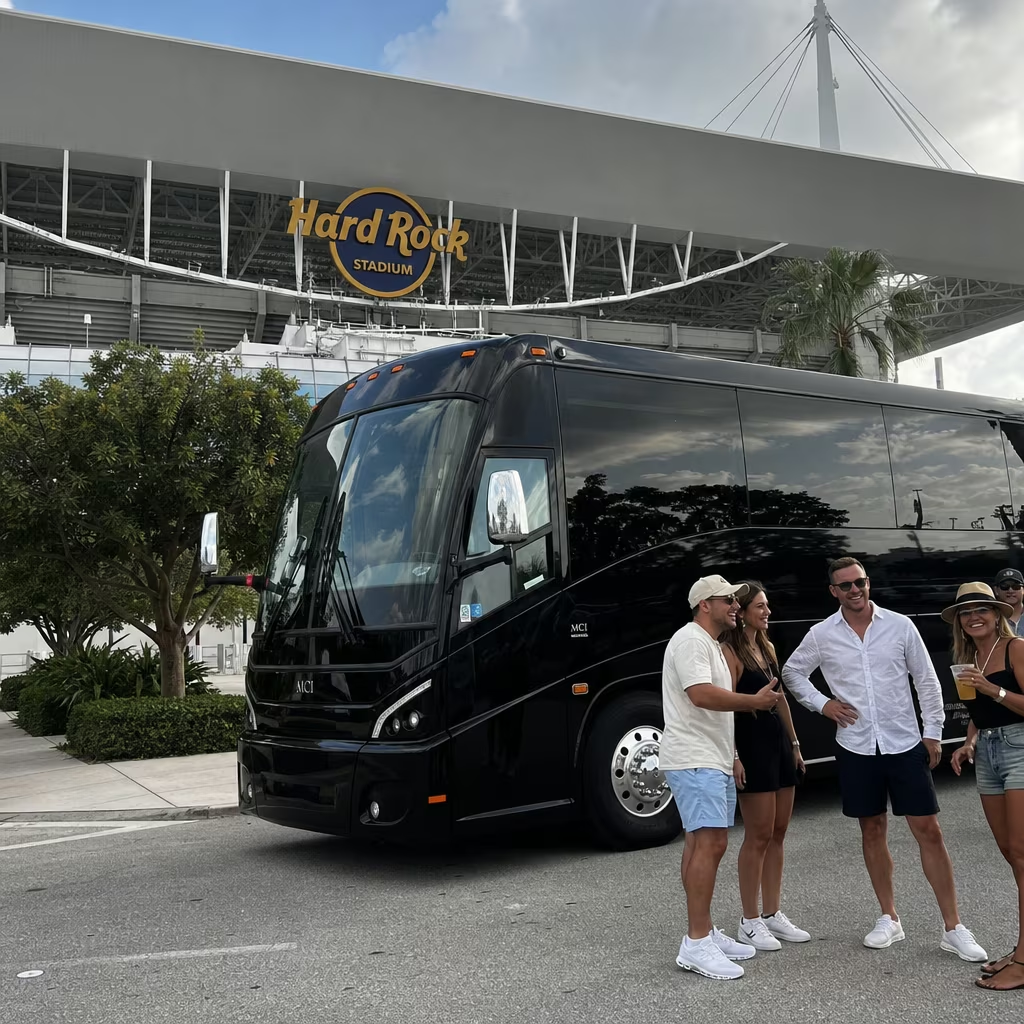
- Rent a bus to Hard Rock Stadium for Dolphins games, Hurricanes games, concerts, and major events in Miami Gardens.
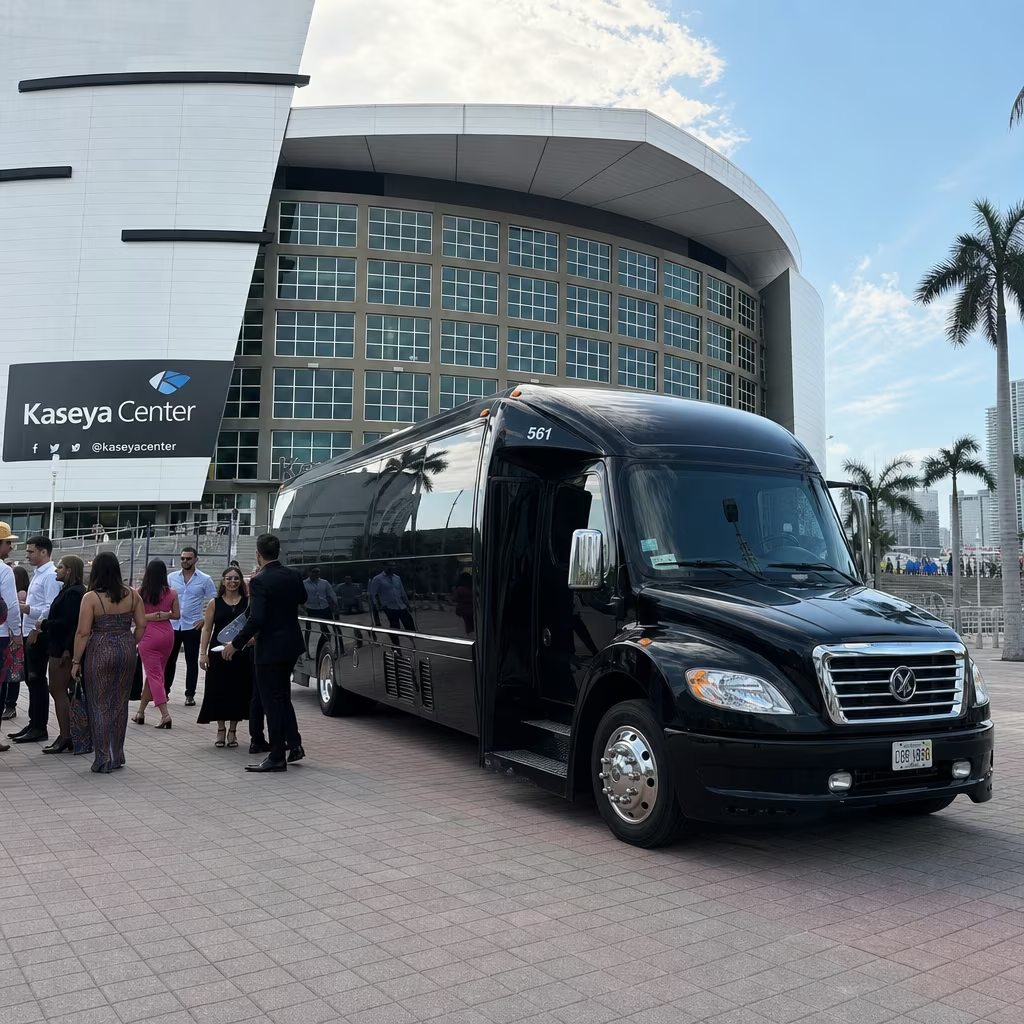
- Rent a bus to Kaseya Center for Miami Heat games and downtown concerts.
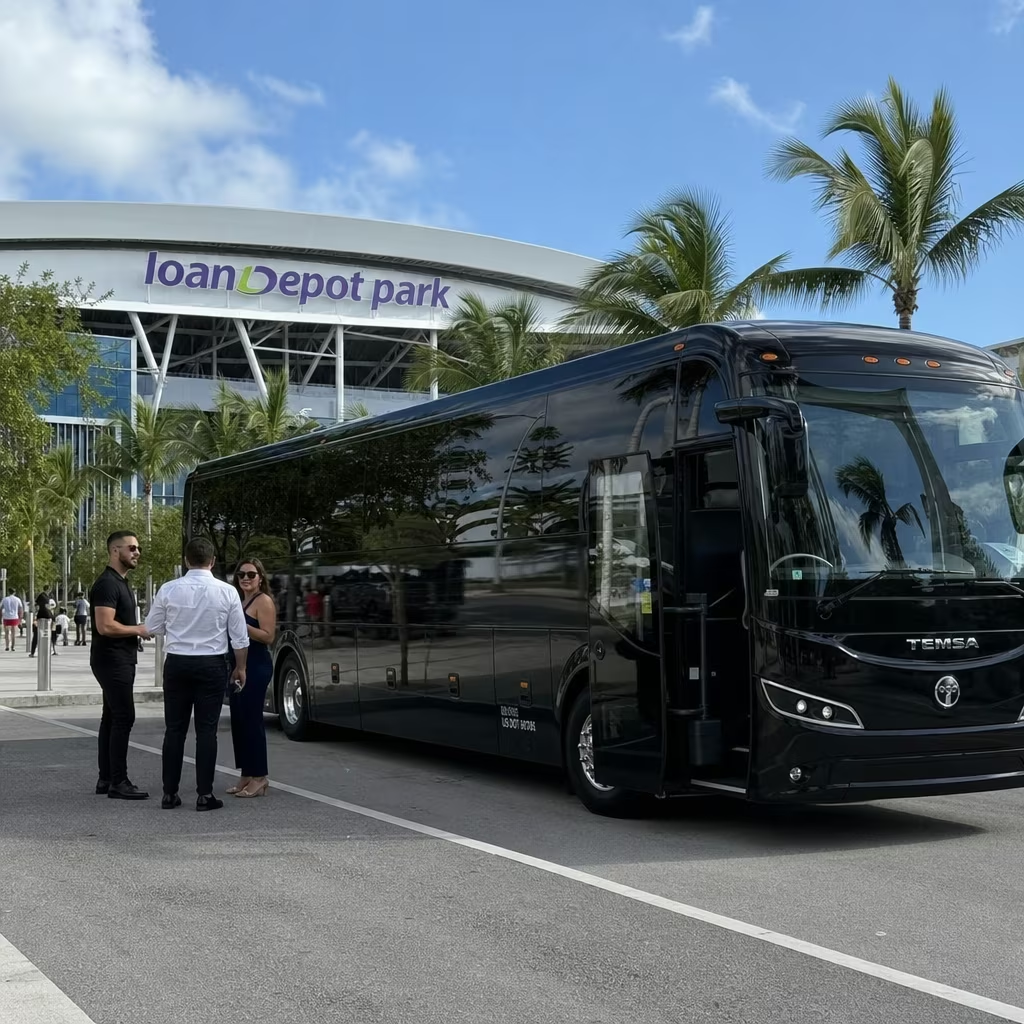
- Rent a bus to loanDepot park for Marlins games and Little Havana group trips.
- Rent a bus to Ultra Music Festival at Bayfront Park when downtown road closures and rideshare zones change.
- Rent a bus to the Formula 1 Miami Grand Prix when Hard Rock Stadium and the surrounding roads become a temporary event district.
- Rent a bus to the Calle Ocho Music Festival for group transportation along Southwest Eighth Street in Little Havana.
- Read the Miami International Airport shuttle guide before a flight-to-port transfer.
How Charterpartybusmiami.com Helps You Find PortMiami Transportation
Charterpartybusmiami.com makes comparing Miami charter buses and party buses simple. Instead of calling transportation companies one at a time, describing the same cruise transfer repeatedly, and trying to compare different rates that do not line up, you submit the trip details once.
From there, you can review different vehicle types, amenities, and estimated all-inclusive prices from a large network of bus companies serving Miami. No account is required, the quote is free, and the process takes about a minute. You choose the vehicle that fits your group, not a single fleet that happens to be available.
That matters at PortMiami because the correct vehicle is not always the biggest vehicle. A small group may want a Sprinter limo. A family reunion may need a minibus.
A corporate group with luggage may need a full-size charter bus. A celebration group may prefer a party bus for the pre-cruise itinerary. Charterpartybusmiami.com helps you see those options in one place.
Request estimates online or call 305-428-2592 any time, any day. Share the cruise line, terminal, group size, pickup points, luggage needs, and desired arrival time, and you can get pricing for your exact trip quickly.
Why Choose Charterpartybusmiami.com for a Miami Charter Bus or Party Bus?
The advantage is selection. Charterpartybusmiami.com is not limited to one fleet, so a group headed to PortMiami can compare several bus types instead of forcing a 12-person group into a 56-seat coach or splitting a 50-person group between multiple smaller vehicles.
You also get a clearer way to plan the cost. The numbers shown online are estimates to help you understand what a rental may cost, and the final price depends on your date, hours, vehicle, pickup route, and terminal. Call 305-428-2592 or use the quick form to get pricing for your actual cruise transfer.
Charterpartybusmiami.com gives you:
- Free quote requests with no account required
- Vehicle options for small groups through large cruise parties
- Estimated all-inclusive rates to help you plan
- Party buses, Sprinter vans, minibuses, and full-size charter buses
- Options for airport transfers, hotel loops, weddings, corporate groups, and family reunions
- One simple place to compare amenities and estimated prices
You never pay for seats you do not need. You get the right bus at the right price for the trip you are planning. Start with the full bus selection or call 305-428-2592 for help narrowing down the right vehicle.
Frequently Asked Questions About PortMiami Bus Rentals
Where does a charter bus drop off at PortMiami?
A charter bus drops passengers and luggage at the designated unloading area in front of the group's assigned cruise terminal. The terminal letter determines the approach and unloading area, so confirm the cruise line, ship, and terminal before leaving the hotel or airport.
Does PortMiami have one address for every cruise terminal?
No. PortMiami has separate addresses for Terminal AA, A, B, C, D, E, F, G, V, and J. The general PortMiami administrative address is 1015 N. America Way, but that is not the correct passenger unloading address for every sailing. Use the official PortMiami directions page to verify the terminal address.
Where does the bus wait after dropping passengers at PortMiami?
PortMiami's public pages identify terminal drop zones and parking facilities but do not publish one universal waiting location for every charter bus and sailing. The bus should leave the active passenger curb after unloading, and the exact staging plan should be confirmed for the cruise line, terminal, ship, and arrival date. Include the desired waiting time in the quote request.
How much does parking cost at PortMiami?
PortMiami lists long-term parking at $35 per vehicle per day in several garages, including Garages B, C, D, F, and G. Garage AA lists $35 per day for overnight parking, while Surface Lot E lists $25 per space per day for oversized vehicles. Rates and private garage arrangements can vary, so review the official parking page before departure.
Can a bus park in a PortMiami garage?
Do not assume a full-size charter bus can use a passenger garage. PortMiami lists clearance limits for its garages, including levels below 7 feet at several facilities. Larger vehicles should follow the current port instructions for passenger unloading and staging instead of entering a garage designed for standard-height vehicles.
How far is PortMiami from Miami International Airport?
PortMiami's FAQ lists Miami International Airport at approximately 7.1 miles from the port, while MIA's own ground transportation page describes the distance as about 9 miles. The exact route depends on the assigned terminal and traffic. A Miami airport charter bus keeps the group and luggage together for the airport-to-port transfer.
How far is PortMiami from Fort Lauderdale Airport?
PortMiami lists Fort Lauderdale-Hollywood International Airport at approximately 25.7 miles away. FLL also has special lower-level loading rules for large charter buses, so include the airport terminal and PortMiami terminal in the trip details.
Can a party bus take a group to PortMiami?
Yes. A party bus can be a good fit for a celebration group traveling from a Miami hotel to the port, especially when the group wants the vehicle for additional pre-cruise stops. Make sure the quote request includes the luggage count because party bus layouts vary and are not all designed for large suitcases.
What size charter bus fits a cruise group?
A 15-35 passenger minibus often fits a mid-size group, while a 40-56 passenger charter bus works better for large families, corporate groups, wedding parties, and school groups. The number of suitcases matters as much as the number of passengers. Ask about undercarriage storage when requesting estimates.
Does PortMiami have accessible facilities?
Yes. PortMiami lists accessible restrooms, elevators, curb cuts, raised lettering, braille signage, wheelchair turnstiles, and other accessible features. ADA-accessible transportation can also be requested through the quote form.
Include lift, aisle, and boarding requirements before pricing is prepared.
Should passengers or luggage be dropped off first?
PortMiami advises passengers to drop luggage and passengers at the designated terminal before parking whenever possible. For a bus group, that means unloading at the correct terminal first rather than sending everyone into a garage with suitcases.
Does PortMiami have luggage storage?
No. PortMiami says luggage lockers are not available because of security regulations. Ask the cruise line about early baggage check-in, luggage forwarding, or other approved arrangements before arriving at the port.
How early should a group leave for PortMiami?
Set the departure time around the cruise line's arrival instructions, then add a buffer for hotel loading, airport baggage, traffic, and terminal congestion. Groups with multiple hotel stops or international airport arrivals need more time than a group leaving one nearby hotel.
Can a bus pick up passengers after the cruise?
Yes. The group should confirm the return terminal before disembarkation because ships do not always return to the same terminal used for departure. PortMiami provides terminal information and limited terminal-to-terminal shuttle service in certain situations, and a pre-arranged bus transfer keeps the group together after collecting luggage.
How do I get pricing for a PortMiami bus rental?
Submit the cruise date, group size, pickup location, terminal letter, luggage needs, and desired arrival time through the quick form, or call 305-428-2592. Charterpartybusmiami.com helps you compare vehicles, amenities, and estimated all-inclusive rates from a large network of bus companies serving Miami. No account is required, and the quote request is free.
Request Estimates for a PortMiami Charter Bus or Party Bus
PortMiami is easy once the terminal, luggage plan, and arrival route are clear. A Miami charter bus or party bus can collect the group from MIA, FLL, Brickell, Miami Beach, Coral Gables, or several hotels, unload everyone at the correct terminal, and keep the cruise day from turning into a multi-car scavenger hunt.
Start with the cruise line and terminal letter, then tell Charterpartybusmiami.com the group size, pickup locations, luggage count, and desired arrival time. Call 305-428-2592 or use the online form to check pricing and availability for your trip in about a minute.
That is the whole process: one quick request, different buses and estimated prices, and a simple way to find transportation that fits your cruise group.